
Move the Paywall
Optimizing the payment step that caused 2/3 of users to drop from signing up for DigitalOcean.
Role: Lead Designer, strategy
Timeline: Q2 - Q3 2024
Team: Cross functional
What's going on during sign up?
Paywall is the biggest barrier to sign up
Through multiple workshops I ran to evaluate the sign up and onboarding experience at DigitalOcean, the paywall step consistently came up as the biggest barrier.
64% of users dropped at this step, 4x higher than anywhere else in the process
We can all relate to abandoning a sign up process when asked for credit card info. Through multiple channels, 3 main themes emerged as to why potential DigitalOcean customers were doing so.
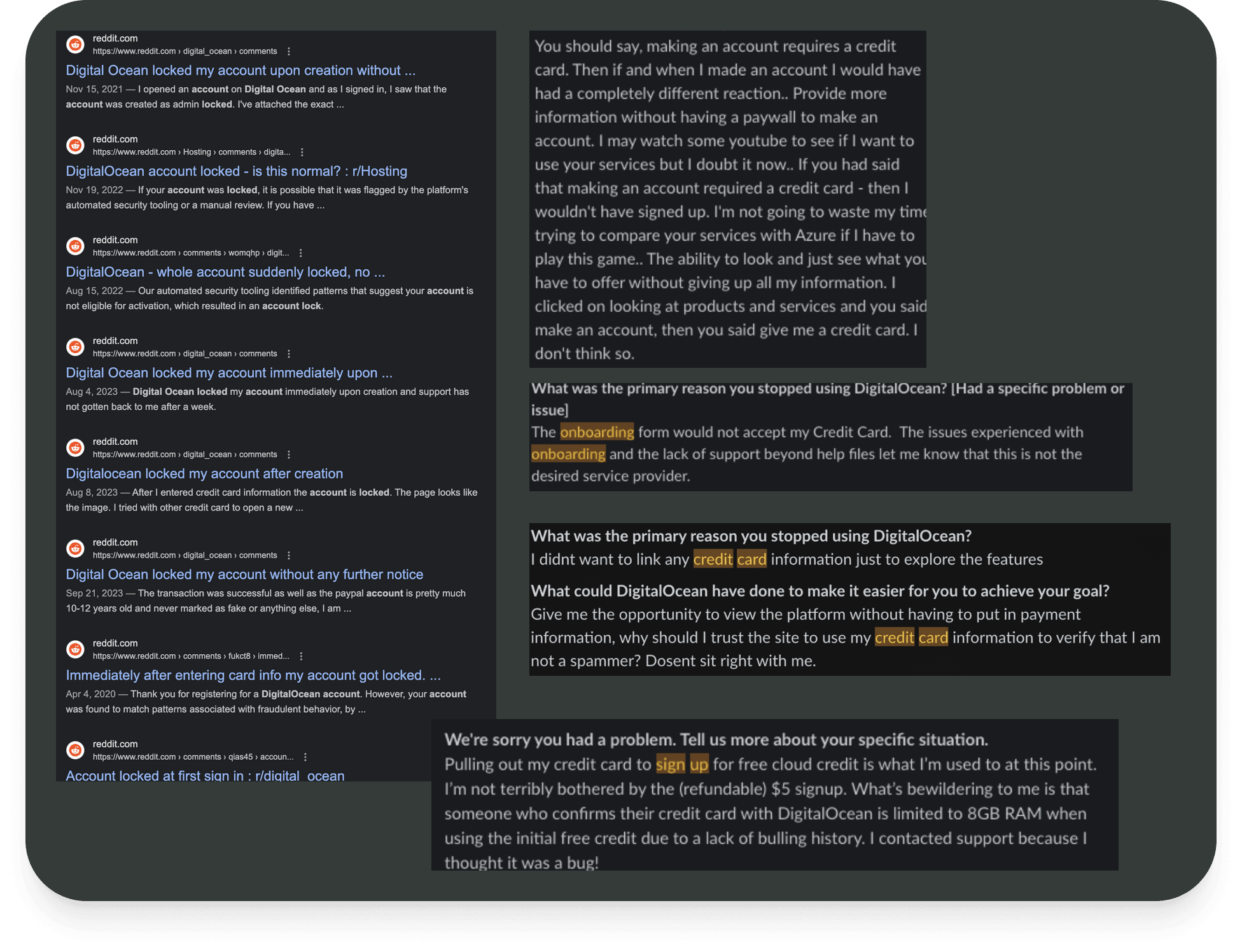
“I want to explore first”
Evaluating DigitalOcean as an option so don’t have enough reason to hand over payment info before seeing the full offering.
“Why do you need payment info now?”
The info was there but consistent feedback asking why it was required during sign up.
“I tried but I couldn’t”
Even when users tried to enter one, they often encountered vague error messages or got locked out without a way to resolve it.
Let's move the paywall
Proposal: Let's move the paywall step later so users can explore DigitalOcean first.
My proposals included moving the paywall to resource creation or offering free credits, which DigitalOcean was doing on our website to new users anyways.
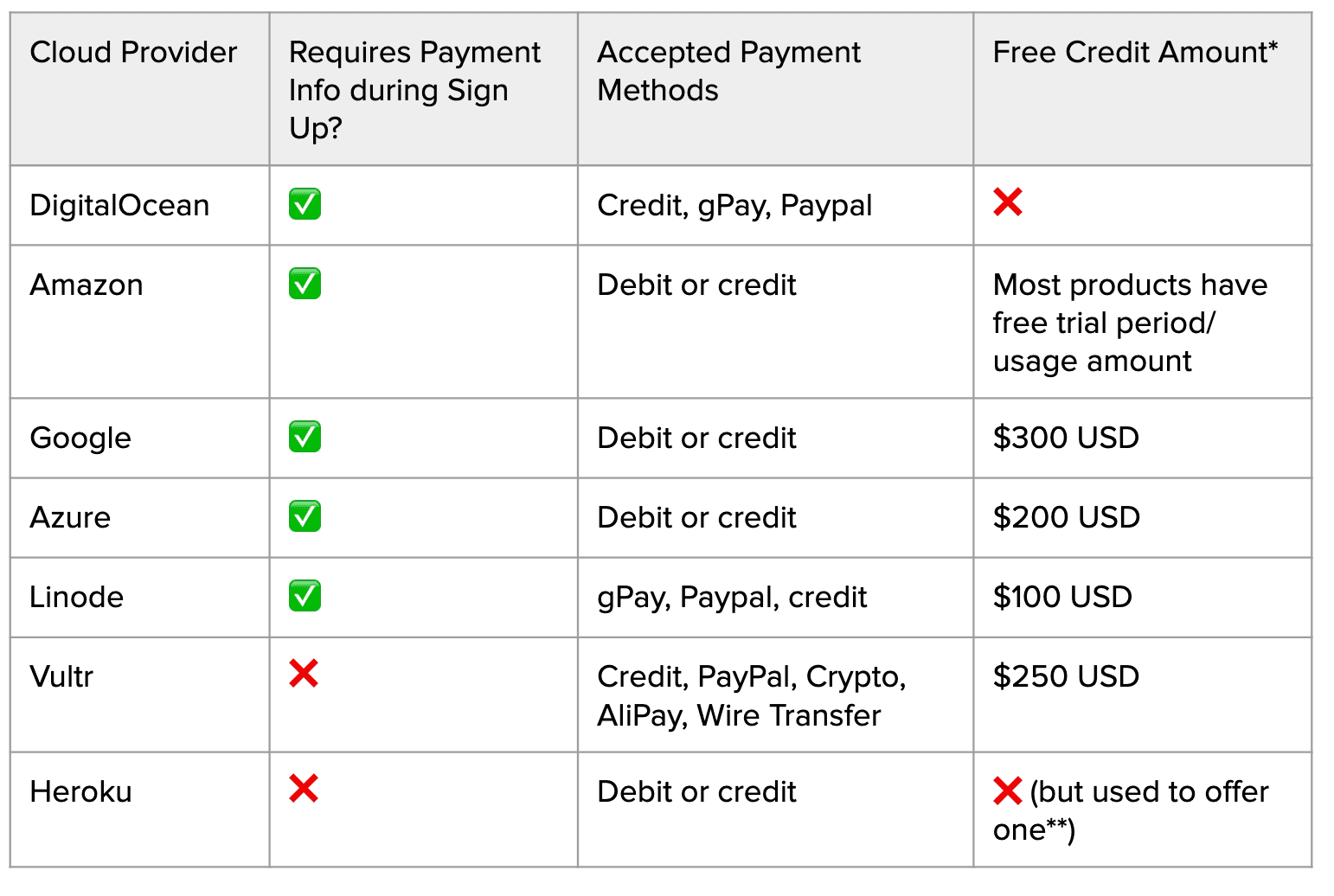
I also found that most competitors also require payment during sign-up but also free credits. We were asking for the same commitment as our competitors while offering less incentive.
Let's (not) move the paywall
Although stakeholders agreed 64% drop-off warranted a serious evaluation, there was strong pushback.
Revenue marketing
Risk to first month revenue metrics. Can’t justify budget to offer free credit for all new sign ups.
Security
Payment info is a critical security signal to deter bad actors and meet legal requirements.
Engineering
With an Ember to React migration happening, any solution in the console would double the eng effort and any new pages built in Ember was seen as a “waste”.
Previous experiments
- Users that sign up with free credits had higher churn rates.
- A prev. attempt at moving the paywall showed increase in drop off.
The strategy: 3 phases, 3 pain points
I understood the hesitation but I still strongly believed that addressing the drop off at paywall would bring the biggest value in the entire sign up process. To bridge this, I went back to everything I'd done so far: user feedback, workshop outputs and the constraints. I realized the pain points could be addressed in a phased experiment plan, ordered from lowest to highest in effort and risk but lowest to highest in value to users.
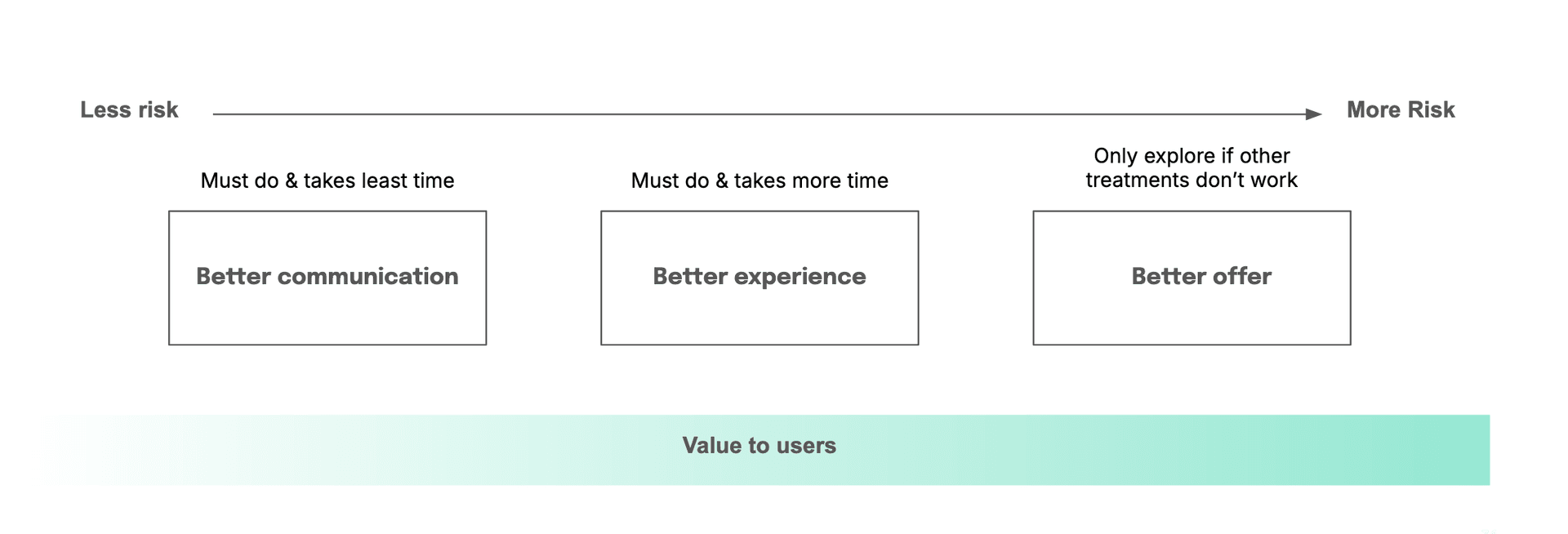
I presented this plan to my team and stakeholders and was able to get alignment with a key principle: we'd only advance to the next phase if the current one didn't move the needle. This would allow for exploring solutions while building a case for the bigger, riskier phases.
Phase 1: Better communication

Hypothesis
Making payment related info more prominent and clear will build trust and reduce hesitation.

Experiment
Improved copy and explored different visual hierarchies. Ran A/B test against a control for 2 weeks. (~40k users per variant)
Results
0.02% increase in conversion. Rolled out variant to 100% of customers and move onto next phase.
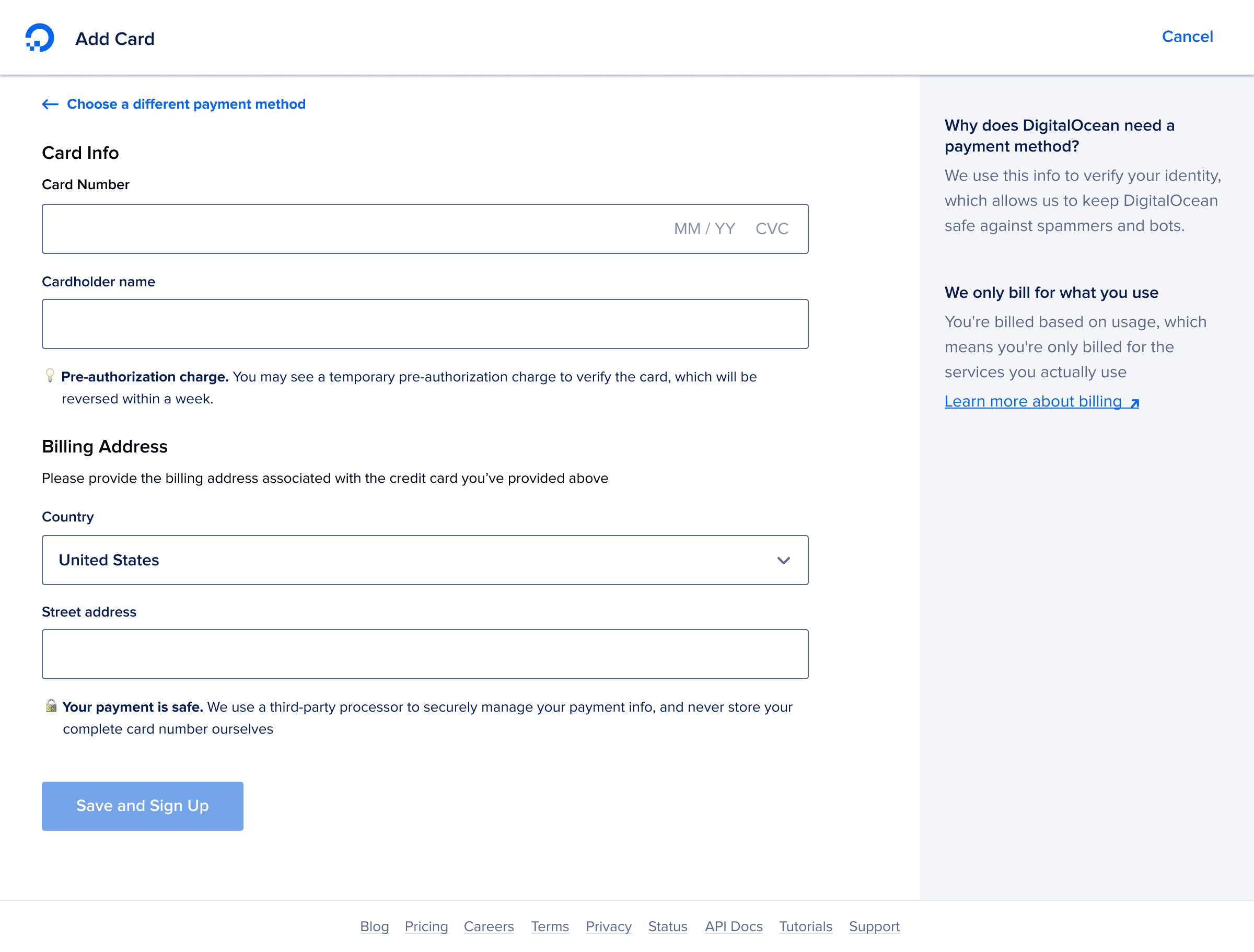
Info scattered across multiple places across 3 pages
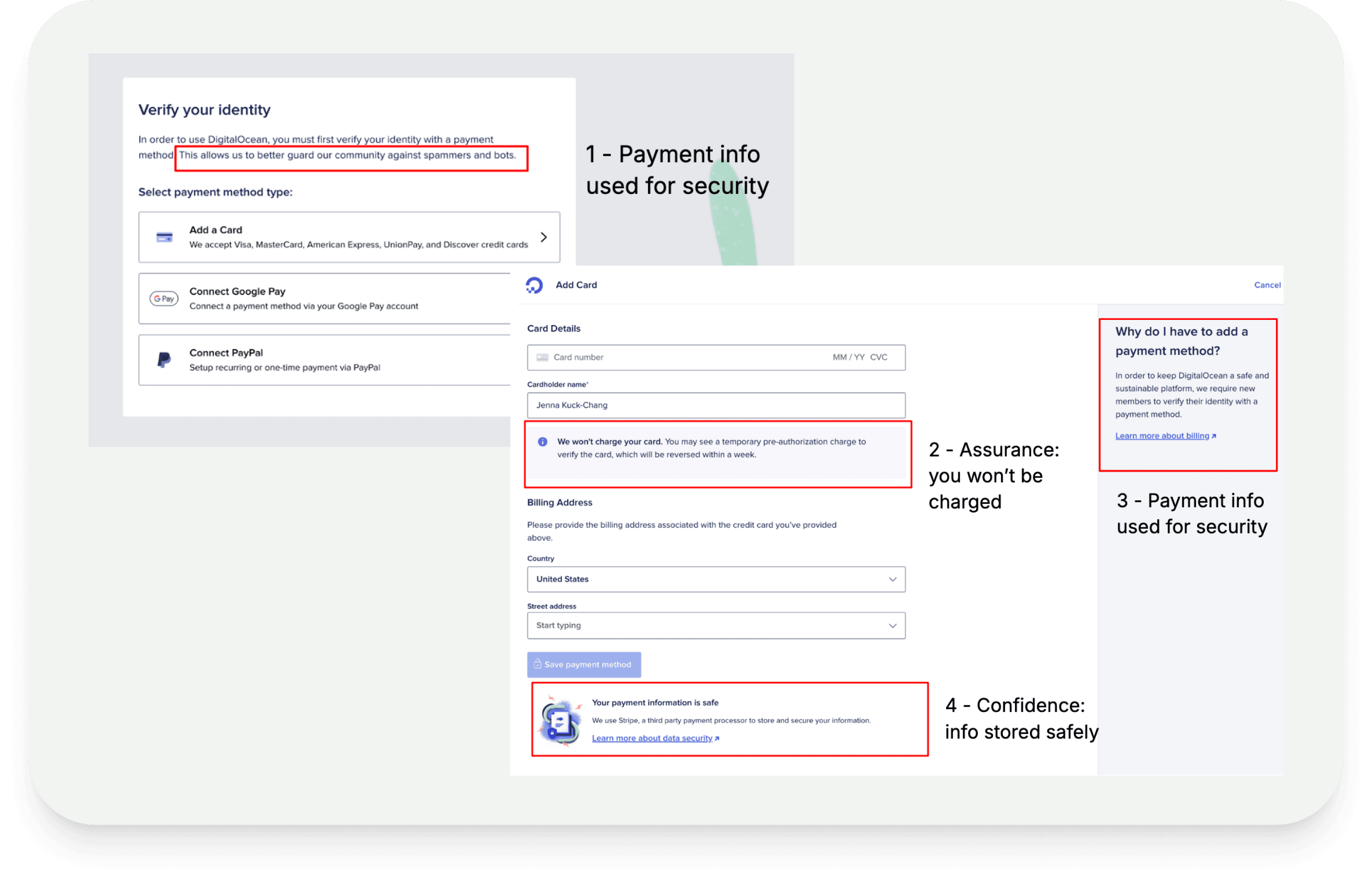
Info given contextually, with details in sidebar
Phase 2: Better experience
Hypothesis
Reducing the decision load should lower the barrier to starting.
Experiment
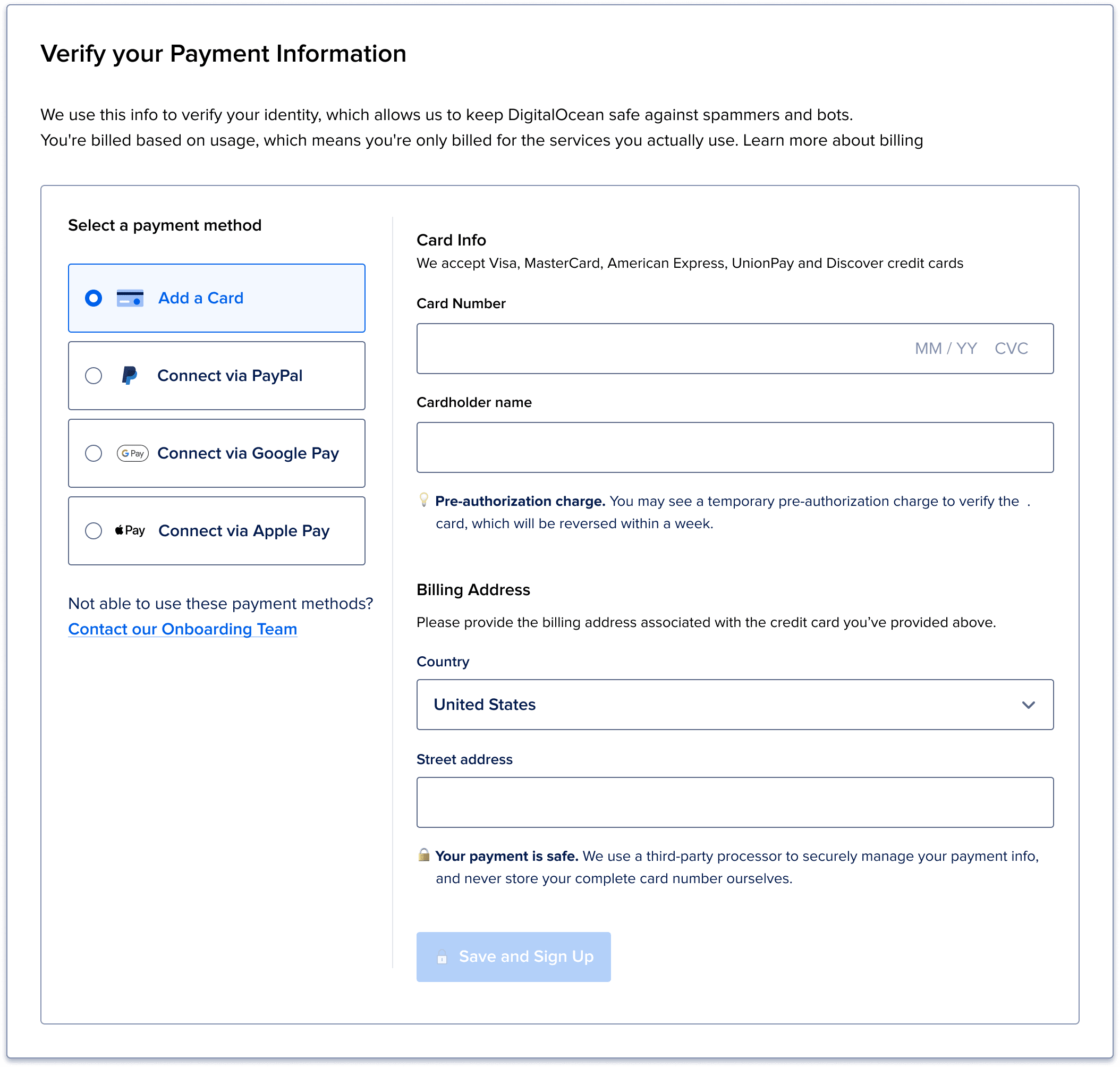
Designed a one-page experience with credit card pre-selected as default.
Results
5% Increase in conversion leading to ~192k Increase in additional first month revenue
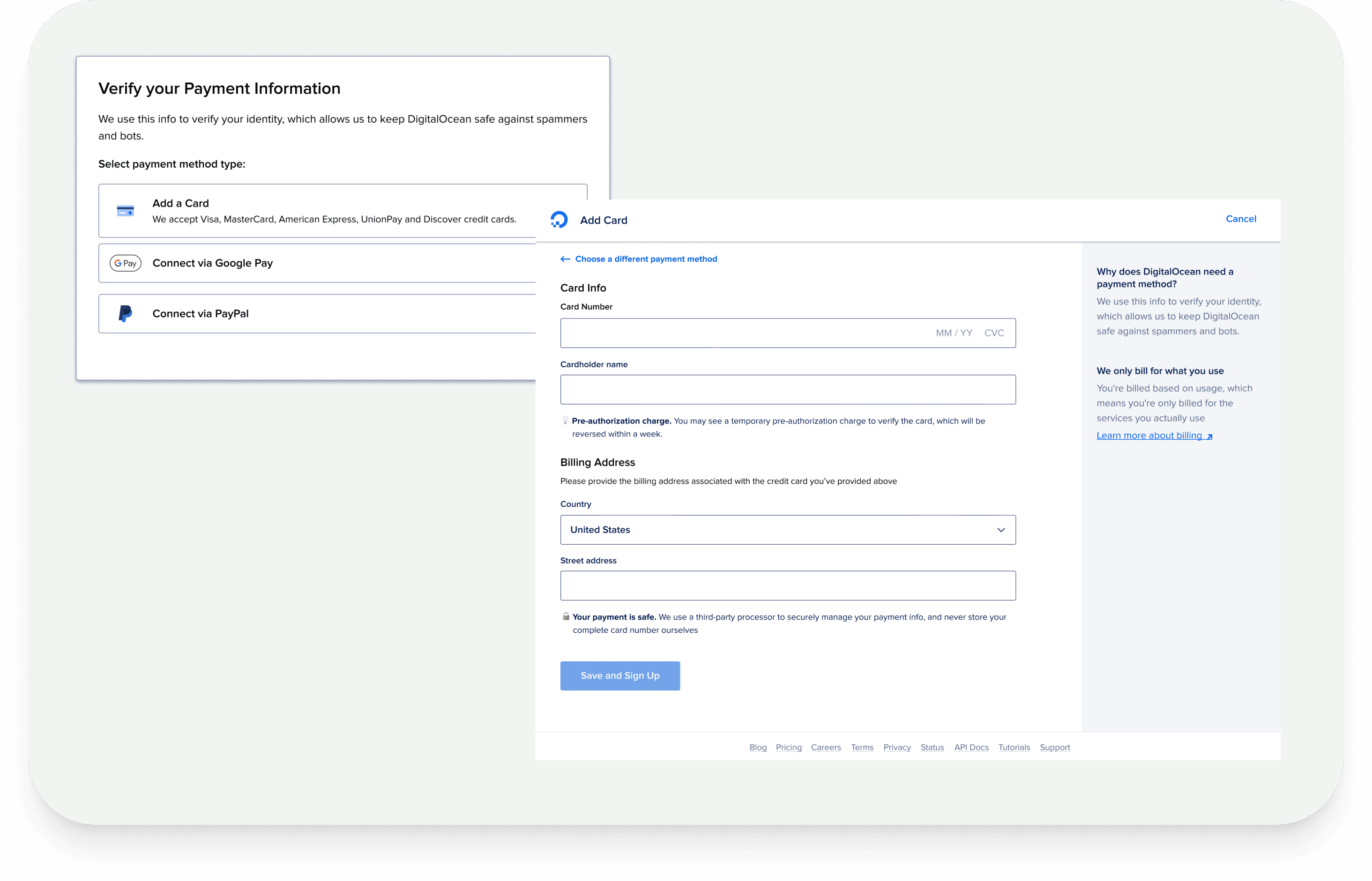
One page experience
Error handling
Through watching ~20 recorded user sessions, I saw that users were hitting a "limbo state" with no feedback, or vague errors like "Sorry! Something went wrong!"
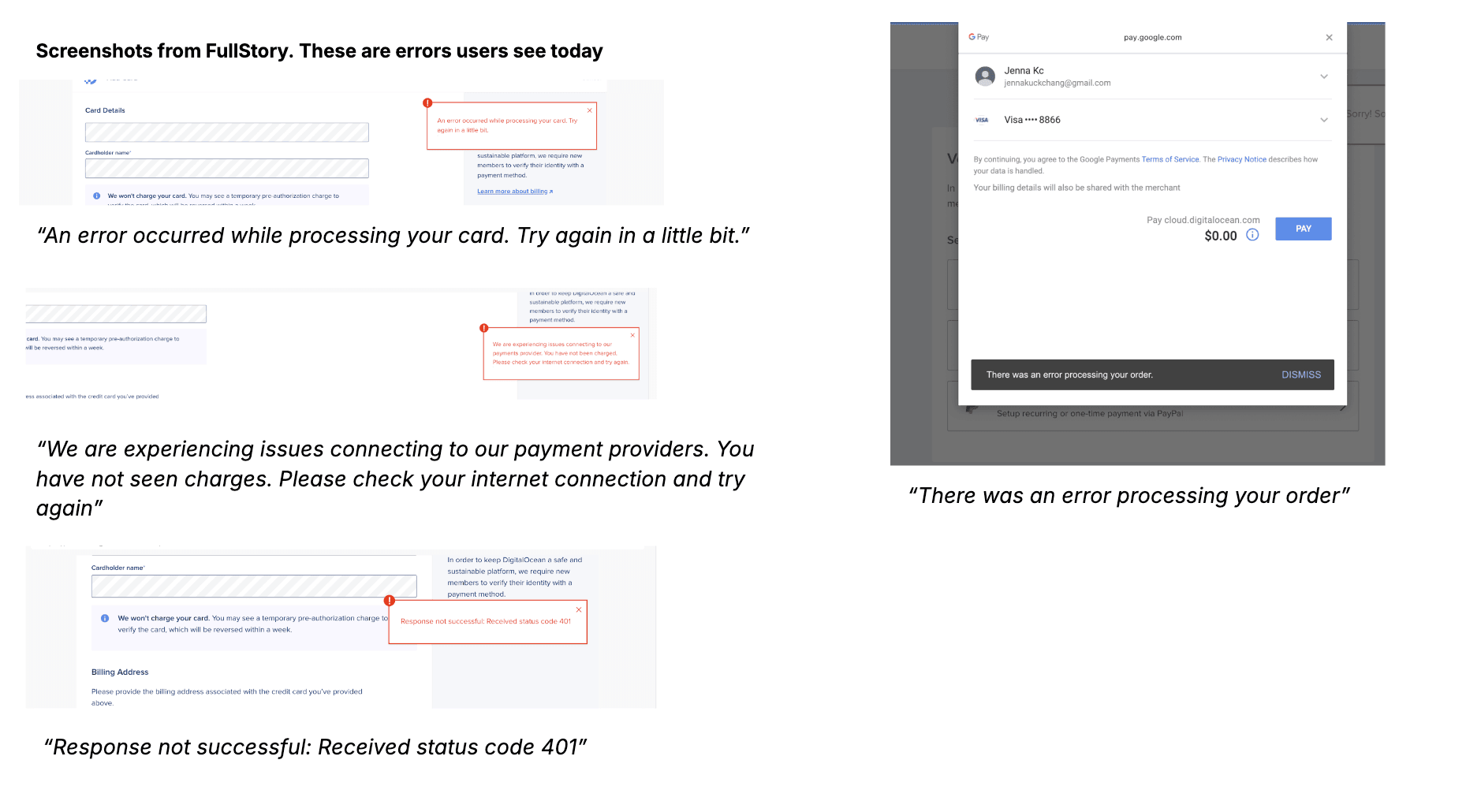
We shipped inline validation, specific declined card messaging, and pathways to support. We also added a "not seeing what you need?" prompt where top requests were passed onto the billing team.
Phase 3: Better offer
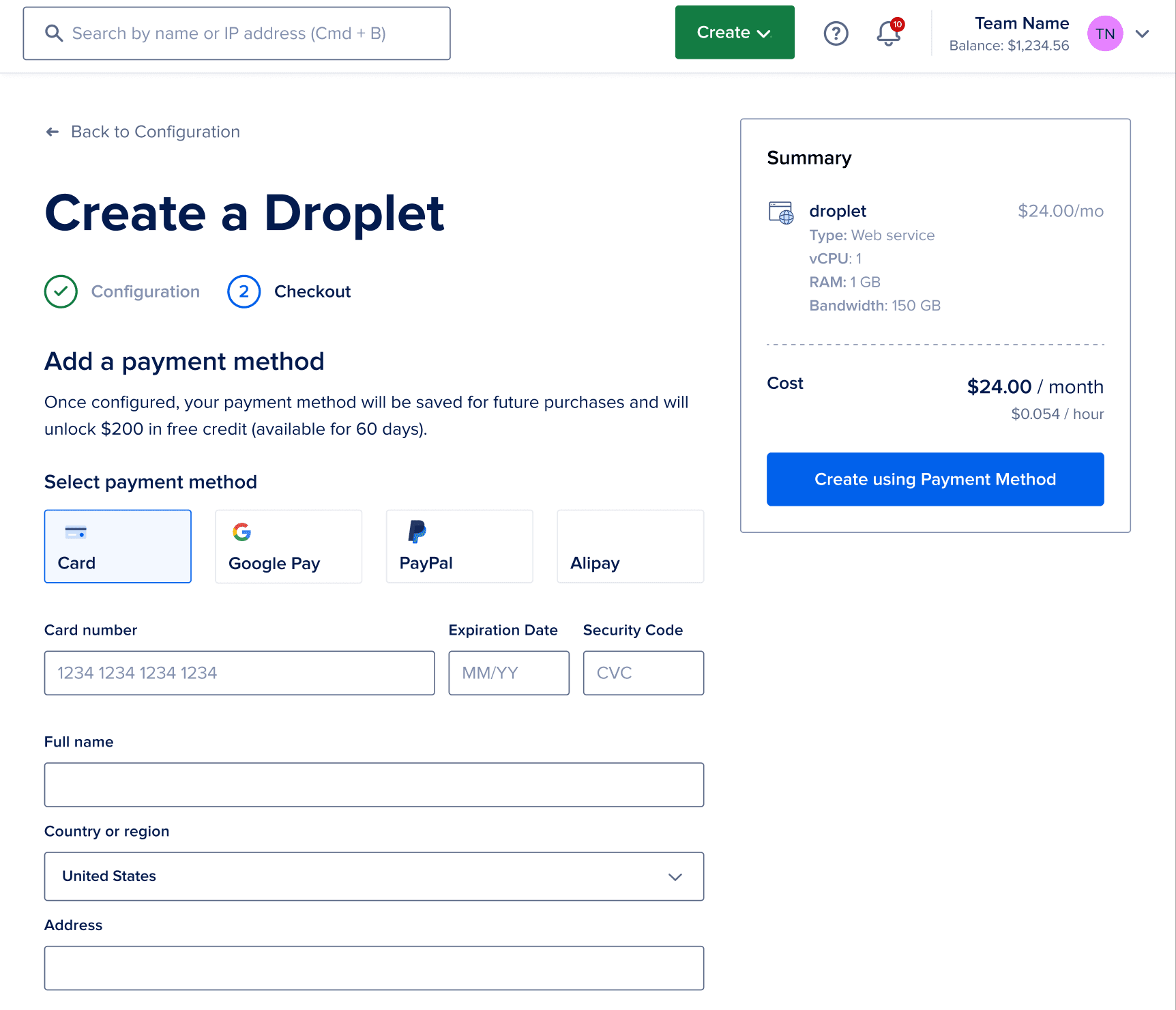
I transitioned off before Phase 3 due to a reorg, but the strategy was designed to lead here, and the groundwork was in place. The new Growth team moved the paywall from sign-up to resource purchase, letting users explore the full console first.
Early results showed 16.6% increase in conversion.
Reflections
Getting the basics right
Experience quality has a direct line to revenue, even when it's not obvious on a roadmap. Things like a generic error on an expired card or an extra selection step cost you. Clean, working experiences aren't just a design standard. They impact the bottom line.
On pacing
I over-indexed on rigor in the early phases. Phase 1 could have been validated with lighter methods. Getting through earlier phases faster would have gotten us to Phase 3 sooner.
On phase 3
I would have tested a targeted a small SMB cohort with a $200 credit, tracking retention and first month revenue.